Tuesday, 30 September 2014

Joseph Pateau


Joseph Antoine Ferdinand was born 14th October 1801 and died 15th September 1883. He was a Belgian physicist and was the first person to demonstate the illusion of a moving image in 1832 by creating the Phenakistoscope.
 
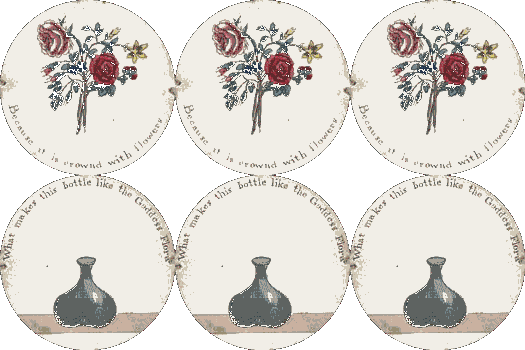
The phenakistoscope worked by using counter rotating disks with repeatedly drawn images drawn on one side of them with small differences between them to create the effect of motion. On the other side it featured regularly placed slits to make the device work.
 
Here is a phenakistoscope working in action:


Aardman Animations


Aardman Animations LTD. Is a British animation studio which is also known as Aardman Animations or just Aardman. It is based in Bristol, in the United Kingdom.

Aardman's is well known for it's films made using stop motion animation, it specialises in the use of the stop motion clay animation techniques. Aardman is mostly famous for their Plasticine characters Wallace and Gromit, who are used in many stop motion animation films.

Here is the famous Wallace and Gromit created by Aardman:


In 2006 Aardman Animations entered the computer animation market when they created the film Flushed Away.
 
Here is Aardman's Flushed Away, created by computer animation means:


Tim Burton


Timothy Walter Burton was born 25th August 1958 and is still alive today. He is an American film director, producer, artist, poet, writer and stop motion artist.

Burton is well known for his dark yet quirky style of work, especially in horror and fantasy films.
Some of the films he created that he became most famous for were Beetlejuice, Ed Wood, Edward Scissorhands, Sleepy Hollow, Dark Shadows and Sweeny Todd: The Demon Barber of Fleet Street.

Burton also created some stop motion films. The ones he became most famous for were The Nightmare Before Christmas, Frankenweenie and Corpse Bride.

Here are a few examples of Burton's stop motion work:

The Nightmare Before Christmas:


Frankenweenie:


Corpse Bride:


 Burton also created some blockbuster films, these included Alice in Wonderland, Batman and it's firat sequel Batman Returns, Pee-wee's Big Adventure, Planet of the Apes and Charlie and the Chocolate Factory.
Tim Burton was also very famous for working alongside the actors Johnny Depp and Helena Bonham Carter (Burton's wife). He also tends to work with musician Danny Elfman, Burton has worked alongside him in all but two of his films.
As of 2012 Tim Burton created 16 films and has produced 12.

Brothers Quay


Brothers Quay were two brothers called Stephen and Timothy Quay. Both were born June 17th 1947 and are still alive today. The two men are American identical twins who are better known as the Brothers Quay or the Quay Brothers.
 
The two brothers were both very influencial in the world of stop motion animation, they did a lot of work as animators themselves.
 
They also won the 1998 Drama Desk Award for Outstanding Set Design. They won this due to their work featured in the play ' The Chairs'.

Thursday, 25 September 2014

Jan Svankmajer

Jan Svankmajer Crystal Globe.jpg

Jan Svankmajer was born 4th September 1934 and is still alive today. He is a Czech film maker and artist and his work is used throughout the media. He is a self labelled surrealist who is famous for his animations and features.

Svankmajer's work has had a lot of influence over other artists such as Terry Gilliam, The Brothers Quay and a variety of others.

Ray Harryhausen


Ray Harryhausen was born 29th June 1920 and died 7th May 2013. He was visual effects creator, writer and producer who made a form of stop motion animation which was called 'Dynamation'.

He was well known for his animation on a film Mighty Joe Young which he created with his mentor Willis O'Brien in 194. This won an Academy Award for Special Effects.

Here is some of Harryhausen's work from Mighty Joe Young 1949:


Ernest B. Schoedsack Gif animated GIF

Harryhausen was also famous for his first ever coloured film The 7th Voyage of Sinbad (1958). Here is an example of some of his work from this film:

Cyclops Ray Harryhausen animated GIF

Another film he was well remembered for would be Jason and the Argonauts (1963). Here is a clip from the most famous scene in the film where skeleton warriors fight:


Harryhausen's last film was Clash of the Titans (1981), after he made this film he retired. Here is a clip from Clash of the Titans:

Check Out the Crazy Ray Harryhausen Gifs; Inspired by 'Jason and the Argonauts' 50th

Harryhausen's style in his special effects work inspired many celebrities, including famous directors such as Tim Burton and John Lasseter.

Stop Motion Animation Terminology

Persistence of Vision:

This is a theory where an afterimage is believed to last for approximately about a twenty fifth of a second in your retina. This helps with creating stop motion movies, especially whilst using devices such as the thaumatrope because your persistence of vision will create the moving effect of the pictures being used.
When stop motion is used with devices such as the thaumatrope, persistence of vision is used. This is when the two pictures on each side of a piece of card or paper are being spun at a rate faster than one twenty fifth of a second and so the picture of one side of the thaumatrope and the picture of the other side will almost be fitted together in your mind to create one image. This is one of the main devices which rely on persistence of vision to work.

Here is an example of a thaumatrope working:


Frame Rates:

This is how many frames per second which are used in a film/video. An example of this would be, if you had a frame rate of 25 fps (frames per second) this would mean within every single second of the film there would be 25 frames used.

Stop Frame:

A stop frame is each frame which is used during stop animation. This is each of the pictures used while creating a stop motion film/video.

Thursday, 18 September 2014

Stop Motion Animation in Music Videos

Stop motion animation has been used quite a few times over the years in music videos. An example of this would be Steriogram's 'Walkie Talkie Man' which was created in 2004. This type of stop motion animation was created with different fabrics and felts to create a whole World of materials. In this video then even used a stop motion effect on their instruments, again with fabric.


Another example of stop motion animations in a music video is in The White Stripes' 'Fell in Love With a Girl' which was created in 2002. This video was created with different lego pieces to create a living World of lego.


Another very unique example of stop animation in a music video is in We Have Band's 'You Came Out' which was made in 2009. This video was made with real life people and the use of face paint to create effects on the peoples faces. 


Stop motion animation has been used throughout another music video called 'An Eluardian Instance' by Of Montreal. This music video was completely made with stop animation and a range of props and people.


Fleet Foxes created a stop motion animation music video called 'Mykonos' which is completely made from paper.


Stop Motion Animation in Advertising

Stop Motion Animation has been used in advertising, an example of this would be in the 'Kia' car advert where they use a large amount of Post-It notes to create a moving, changing wall behind the car.


Kia also did another stop motion animation advert with nail art. Kia were the first people to ever do this in 2011. This was created with 1,200 bottles of nail varnish and it took over 25 days and nights to complete, each nail was painted over the course of around 2 hours.


Stop Motion Animation in Computer Games

On occasion, stop motion has been used for the creation of characters in computer games. This has been done as an alternative to using CGI. An example of this would be in the game Magic and Mayhem made in 1998 (also known as Duel: The Mage Wars). These characters were made by a man called Alan Friswell. These characters were made from modelling clay and latex rubber, they would be moulded over figures made from wire and ball-and-socket joints. The models would have then been animated into the game one frame at a time and later put in to the rest of the CGI parts of the game through digital photography.

Here is a picture of the game play from Magic and Mayhem:


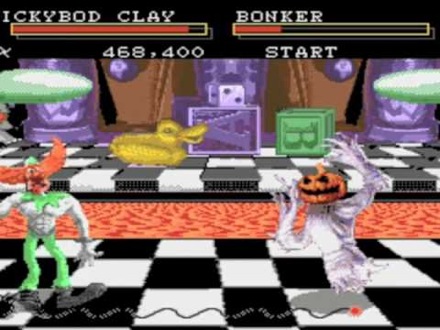
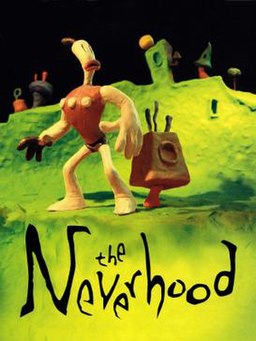
Clayfighter, made for the Super Nintendo console and The Neverhood which was made for PC are other computer games which use stop motion animation.

Clayfighter:


The Neverhood:

                                      The Neverhood - box art.jpg

Wednesday, 17 September 2014

Willis Harold O'Brien


                                                      Willis H. O'Brien.jpg

Willis Harold O'Brien was born 2nd March 1886 and died 8th November 1962. He was an American motion animation pioneer who "was responsible for some of the best known images in cinema history" (ASIFA- Hollywood).

Willis was best known for his work on The Last World (1925) King Kong (1933) and Mighty Joe Young (1949). This is how he won the 1950 AcademyAward for Best Visual Effects.

Here are a few examples of Willis's work:

The Lost World (1925):
The Lost World (1925) (© Everett Collection/Rex Features)


King Kong (1933):


Mighty Joe Young (1949):

Ernest B. Schoedsack Gif animated GIF

George Pal

                                                       George Pal (1979).jpg

George Pal was a Hungarian born American animator and film producer who was mainly associated with the science fiction genre in films. He was born 1st February 1908 and died 2nd May 1980.

George Pal was nominated for Academy Awards in the category for best short subjects, Cartoon for seven years in a row (this was from 1942 until 1948). In 1944 he received an honorary award and became the second most nominated Hungarian exile after Miklos Rozsa.


The Lumiere Brothers

Fratelli Lumiere.jpg


Auguste and Louis Lumiere were the first film makers in history and were known as the Lumiere Brothers. Auguste was born 19th October 1862 and died 10th April 1954. His younger brother Louis was born 5th October 1864 and died 6th June 1948.

The Lumiere Brothers, as well as being the first film makers ever in history, also had the licenses to the cinematograph. This was a creation that allowed viewing motion pictures by multiple groups all at the same time, like modern cinemas allow today.

The cinematograph was originally invented by a French inventor called Leon Bouly on February 12th 1892. He had originally named his invention as the 'cinematographe' but he had a lack of money in which to develop his ideas properly and so sold his rights to the Lumiere Brothers.

Here is a picture of the cinematograph that the Lumiere Brothers would have used:


The Lumiere Brothers first film was called Sortie de L'usine Lumiere de Lyon and was shot in 1894. This was the first real motion picture ever made and was screened in L'Eden, Paris, the World's first and oldest cinema.

Here is a picture of the cinema L'Eden today:


Eadweard James Muybridge

Muybridge-2.jpg


 Eadweard James Muybridge was born 9th April 1830 and died 8th May 1904. He was an English photographer and was well known for his pioneering work in photographic studies in motion and for his work in the early stages of motion picture projection.

In 1868 Muybridge became World famous for his large pictures of Yosemite Valley.

Here is one of his pieces of work of Yosemite Valley from 1872:


Nowadays, Muybridge is famous for his pioneering work of animal locomotion in 1877 and 1878. This is where he used multiple cameras to capture movement in stop motion photographs. 

Here is an example of Muybridge's work in animal locomotion:


Eadweard also created a device called the zoopraxiscope. This was an early device used for displaying motion pictures. It was created in 1879 and would have been considered as the first movie projector ever made. The zoopraxiscope worked by projecting images from rotating glass disks in a rapid series to give the illusion of motion. 

Here is an example of zoopraxiscope disk and then a gif of it working in action:


Tuesday, 16 September 2014

Charles-Emile Reynaud

Reynaud.jpg


Charles-Emile Reynaud was a French inventor who was born 8th December 1844 and died 9th January 1918.

Reynaud was the first person to produce projected animation cartoons. He created the praxinoscope in 1877. This was an animation device which replaced the zoetrope. It was very alike to the zoetrope as they were both devices that used a strip of pictures placed around the inside of a spinning cylinder to create the illusion of a moving image. However, even though the zoetrope and the praxinoscope were very alike in the way they were made, the praxinoscope was an improvement on the zoetrope. This was because the praxinoscope replaced the narrow viewing slits which the zoetrope had with circular mirrors so the reflections of the pictures inside it appeared as if they were stationary whilst in position. So now as the wheel turned the viewer would see a rapid sequence of images to produce an illusion of motion. This would have been brighter and less distorted than the zoetrope.

Here is a picture of a zoetrope and then a praxinoscope to show you the differences between the two:


Reynaud also created his Theatre Optique in December 1888. This was a perfected version of his Praxinoscope Theatre which he created in 1878. This was created using a glass viewing screen which allowed a moving image to be covered over a changeable background. His first projection version of this creation was made in 1880 in which he used a lantern to project moving images into a small screen so it could be viewed by a larger audience, although it was still limited to twelve images. Reynaud's Theatre Optique where he managed to create a continuous series of moving images instead of just the twelve that he was limited to before. He created this by using glass plates that he individually painted by himself and mounting them in leather bands. Each of these bands were then connected by one big metal strip with a hole through it which allowed it to be placed on a pin on a rotating drum to align the image with his lantern that he used for projecting. These image strips were then mounted on a pair of wheels which are relatively similar to modern day film reels.

Here is a poster of Reynaud's first Theatre Optique show:


In 1892 Reynaud projected his first ever animated film for the viewing of the public. This was called Pauve Pierrot and was shown in the Musee Grevin, in Paris. This is also significant as it was the first time that film perforations were used.

Here is a picture of some of the more original film perforations that would have been used around Reynaud's time:


William Horner

Image


William George Horner was a British pioneer and mathematician. He was born sometime in 1786  and died 22nd September 1837.

William Horner created a device called the 'zoetrope' in 1834. This was a device which produced an illusion of movement and actions from a fast and rapid succession. The zoetrope was based on another device called the phenakistoscope  which was another animation device that was created in 1832.

Here is a picture of a disk from a phenakistoscope and then a gif of a phenakistoscope in action:


In comparison, here is a picture of a more traditional zoetrope:


The zoetrope made animation viewing simpler for the viewer because it had small slits along the sides of it where the viewer could look into it. This gives a better effect than what the penkistoscope gave and so became a more successful animation device. It was also considered so good to the viewers because the designs for it varied from animals to as big as football players. Due to this fact the audience for the zoetrope was very large and the device was so successful that it is still used today.

Here is an example of zoetropes used in more modern times:


Thursday, 11 September 2014

Introduction To Stop Motion Animation

This is my blog around Stop Motion Animations, the different techniques used for it, the different artists who have used Stop Motion throughout time in their films, music videos , cartoons etc. I will also be blogging about the history of Stop Motion Animation. To start I will go through the basic principles  of Stop Motion Animation. 

Stop Motion Animation is a film or video making technique where in making a film you can add something abnormal to the real World - such as a monster - without the use of CGI, an example of this would be in the film Clash Of The Titans (1981). Stop Motion is also used to move an item or object in a video or film without the audience being able to see that it has been moved.

This technique is achieved by firstly taking a picture of the object you wish to be used in your film in it's desired starting position. This will be your first frame. Next the object must be moved a very small amount and posed ready for the next picture, this picture will then become your second frame. This process gets repeated until the scene you wanted to create with that object is completed (when all the frames needed have been taken). Lastly you must edit all of the frames to fit together; this can be achieved with many different editing and/or video creating softwares. This then will create the Stop Motion scene where your object will appear to be moving all by itself. 

Here are some examples of Stop Motion Animation in films: 


coraline gif | via Tumblr


Nightmare Gifs - nightmare-before-christmas Photo